What Is Multi-Sensory Phonics? (And Why It Helps All Young Readers)
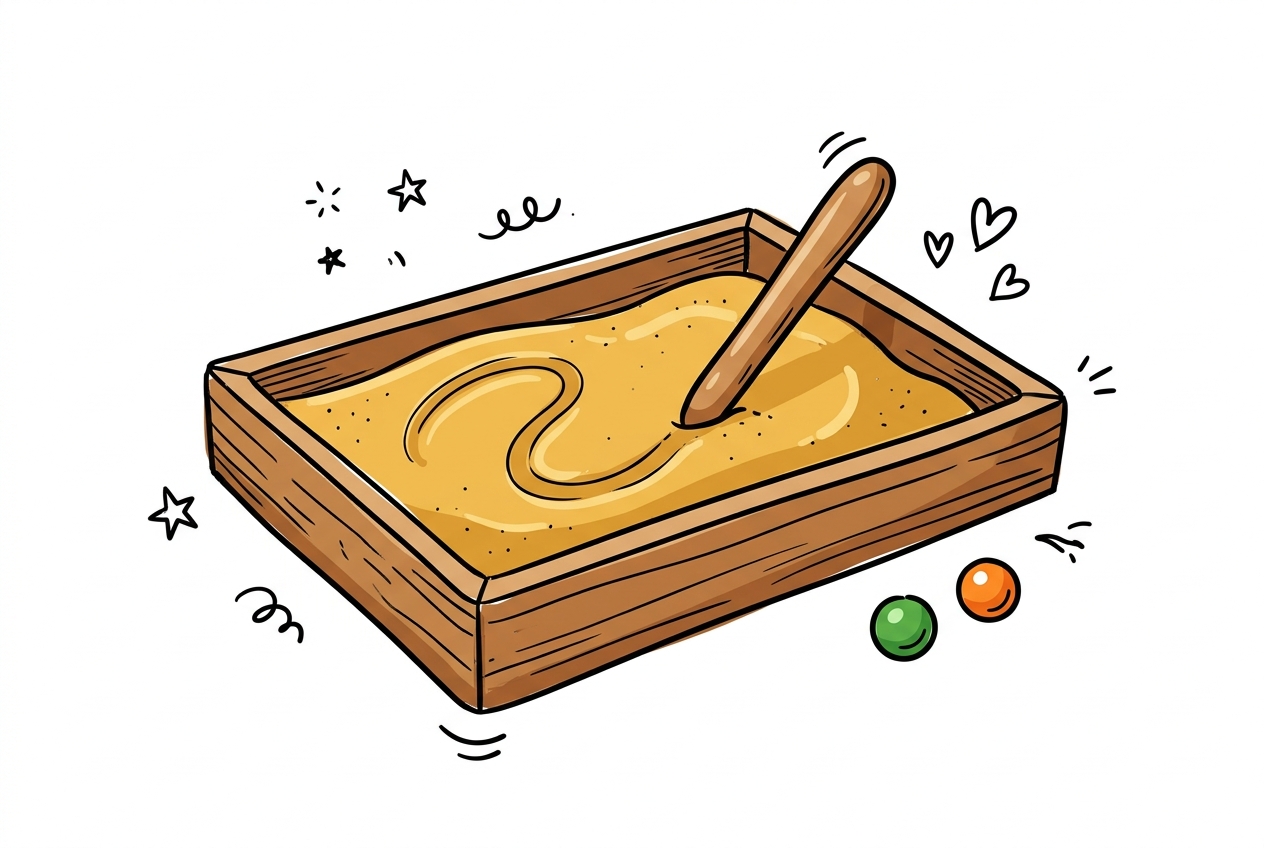
Multi-sensory phonics teaches letter-sound relationships through sight, hearing, touch, and movement at the same time. When a child traces a letter in sand, says the sound aloud, and feels the shape form under their fingertip, three channels encode the same information at once. Research links this approach to stronger retention, especially for children who find visual-only drill difficult.
Your child knows the sound /m/ makes. They can say it, point to the letter, tap it on a drum. But when it appears in the middle of an unfamiliar word, something gets lost in translation.
This is where multi-sensory phonics earns its name.
What is multi-sensory phonics?
Multi-sensory phonics is an approach to teaching letter-sound relationships that deliberately engages more than one sensory channel at a time. Instead of a child only looking at a letter on a flashcard, they might trace it with a finger in a tray of sand, say the sound aloud as they trace it, and feel the shape form under their fingertip. Three pathways encode the same information simultaneously.
The technique has roots in structured literacy, the evidence-based approach to reading instruction that brings together phonemic awareness, phonics, fluency, vocabulary, and comprehension in a systematic, explicit sequence. Multi-sensory instruction is one of the six defining features the International Dyslexia Association lists for structured literacy programmes, which is why you will encounter it across school-based reading support, specialist tutoring, and at-home practice guides alike.
Why does using more senses help a sound stick?
The brain stores information through networks of associations. When a child learns that the letter m makes the sound /m/, that link is initially fragile. Repetition strengthens it, and so does variety of input.
When a child sees a letter (visual), hears its sound (auditory), traces its shape (kinesthetic), and feels the texture of sand or sandpaper under their fingertip (tactile), they create multiple encoding pathways for the same piece of information. If one pathway is weak — as it often is for children who are newer to reading — another can carry the load.
A 2022 research synthesis published in Frontiers in Psychology (Araújo, Maurer, & Fernandes, 2022) reviewed how audio-visual and motor-visual associations develop in early readers across different writing systems. The synthesis found that integrating sound and movement alongside visual input strengthens the neural specialisation for print: the brain’s increasing ability to recognise letter patterns rapidly and reliably. This process, sometimes called orthographic mapping, happens more reliably when multiple sensory pathways are engaged during early phonics instruction.
Which multi-sensory techniques can I try at home?
None of these require special equipment or a teaching background. Most use things already in the house.
| Technique | Senses involved | How to do it |
|---|---|---|
| Sand or salt tray tracing | Tactile, kinesthetic, visual | Pour fine sand or salt into a shallow tray. Say a sound, then trace its letter slowly as you repeat it. |
| Sky-writing | Kinesthetic, visual, auditory | Hold your arm out and write the letter large in the air using big, whole-arm movements. Say the sound as you write. |
| Tap and say | Auditory, tactile, kinesthetic | Tap a different finger for each phoneme as you say a word aloud. Three taps for /k/ /a/ /t/. |
| Textured letter cards | Tactile, visual | Make rough-surface letter cards from sandpaper or textured fabric. Trace the shape while saying the sound. |
| Clay or playdough letters | Tactile, kinesthetic | Shape a letter from clay while repeating its sound. Squeezing the clay adds another motor cue. |
These techniques connect naturally to the sound-blending practice your child may already be doing. Once individual sounds feel secure through multi-sensory repetition, merging them into words becomes easier.
Does multi-sensory phonics really work?
The evidence is positive, with one important nuance worth understanding.
A 2026 longitudinal study by Oliveira and colleagues, following 76 at-risk students across four assessment cycles in Brazilian public schools, found significant and sustained improvement in phonics skills among children who received structured multi-sensory phonics intervention. A 2024 doctoral study by Kalogris (St. Thomas University) examining multi-sensory phonics in K–2 inclusion classrooms found meaningful gains in word recognition and decoding for children who participated in structured multi-sensory programmes.
The nuance comes from a major meta-analysis published in Reading Research Quarterly in 2023. Hall and colleagues reviewed 53 studies involving more than 6,000 children in grades K–5 and found that the active ingredient in effective reading intervention is explicit, systematic phonics instruction — the kind where skills are taught in a clear sequence, with direct explanation and guided practice. Multi-sensory activities appear to strengthen engagement and accessibility, particularly for children who struggle with visual-only drill, but they work best when paired with that systematic foundation, not substituted for it.
In practice, this is good news for home use: a sand tray or playdough letter is most effective when it sits inside a consistent, structured phonics routine rather than appearing as an isolated activity.
Do all children benefit, or is this mainly for struggling readers?
Both, at different intensities.
Multi-sensory phonics has its strongest research base with children who find reading difficult — including those with dyslexia and those learning a new language. A 2021 peer-reviewed study in the Canadian Journal of Education (Langille & Green) found that multi-sensory phonics programmes produced meaningful gains specifically for children learning English as an additional language, because tactile and kinesthetic channels gave them extra routes to phonemes they could not yet hear clearly in the new language.
Children who are progressing typically also benefit from the variety. A sand tray is simply more engaging than a flashcard for most five-year-olds, and engagement is not a luxury in early reading instruction: a child who finds the activity enjoyable does more of it, which is how the repetition accumulates.
Phonological awareness activities are a natural companion: clapping syllables, stretching words into sounds, and rhyming games build the sound-level foundation that multi-sensory phonics then anchors to letters.
How do I build a simple multi-sensory phonics routine?
Keep it short and varied. Five to seven minutes, three or four times a week, is enough.
A simple session structure:
- Introduce or review one sound. Say the letter name and sound. Show the letter card.
- Trace it two ways. Use a sand tray for tactile input, then sky-write it for movement. Say the sound each time.
- Say a word with that sound. Tap the phonemes on your fingers. Ask where in the word the target sound sits.
- Find it in print. Spot the letter in a book or a simple decodable reader to close the loop between isolated practice and real reading.
Always end on something your child gets right. The session should close on a confident note — that small win is what keeps them willing to come back tomorrow.
FAQ
Is multi-sensory phonics the same as structured literacy?
Not exactly — multi-sensory instruction is one feature of structured literacy, not the whole approach. Structured literacy also includes systematic sequencing, explicit teaching, and practice across phonemic awareness, phonics, fluency, vocabulary, and comprehension. Multi-sensory techniques work best when used inside that broader, systematic framework.
At what age can children start multi-sensory phonics?
Most children are ready to start learning letter-sound relationships around ages 4 to 5. Multi-sensory techniques suit this age group well because they are tactile and playful. Before formal letter-sound work, activities like clapping syllables and rhyming are the most productive preparation.
Do I need special equipment or kits?
Not at all. A baking tray with a thin layer of fine sand, a piece of rough cardboard, or a ball of playdough is everything you need. Specialist sandpaper letter sets exist and are useful, but they are far from required.
How is multi-sensory phonics different from regular phonics?
Regular phonics instruction focuses primarily on visual and auditory channels: looking at letters and hearing or saying sounds. Multi-sensory phonics adds touch and movement. The combination creates more encoding pathways and tends to increase time on task, because children find hands-on activities more engaging than flashcard drill alone.
Can multi-sensory phonics help a child with dyslexia?
Multi-sensory structured literacy programmes have the strongest research base among approaches used with children who have dyslexia. That said, if you have concerns about your child’s reading development, a qualified reading specialist or educational psychologist is the right person to consult — this article is educational, not diagnostic.
How long should a multi-sensory phonics session last?
Five to ten minutes is enough for most young children. Short, frequent sessions — ideally daily or near-daily — produce more durable learning than longer, infrequent ones. The goal is a consistent habit, not an extended lesson.
If you’d like your child to practise letter sounds in a playful, guided setting — with instant feedback when they get one right — Snappy was built for exactly that. Start a five-minute session at snappyreading.com/app tonight.
Frequently asked questions
Is multi-sensory phonics the same as structured literacy?
Not exactly — multi-sensory instruction is one feature of structured literacy, not the whole approach. Structured literacy also includes systematic sequencing, explicit teaching, and practice across phonemic awareness, phonics, fluency, vocabulary, and comprehension. Multi-sensory techniques work best when used inside that broader, systematic framework.
At what age can children start multi-sensory phonics?
Most children are ready to start learning letter-sound relationships around ages 4 to 5. Multi-sensory techniques suit this age group well because they are tactile and playful. Before formal letter-sound work, activities like clapping syllables and rhyming are the most productive preparation.
Do I need special equipment or kits?
Not at all. A baking tray with a thin layer of fine sand, a piece of rough cardboard, or a ball of playdough is everything you need. Specialist sandpaper letter sets exist and are useful, but they are far from required.
How is multi-sensory phonics different from regular phonics?
Regular phonics instruction focuses primarily on visual and auditory channels: looking at letters and hearing or saying sounds. Multi-sensory phonics adds touch and movement. The combination creates more encoding pathways and tends to increase time on task, because children find hands-on activities more engaging than flashcard drill alone.
Can multi-sensory phonics help a child with dyslexia?
Multi-sensory structured literacy programmes have the strongest research base among approaches used with children who have dyslexia. That said, if you have concerns about your child's reading development, a qualified reading specialist or educational psychologist is the right person to consult — this article is educational, not diagnostic.
How long should a multi-sensory phonics session last?
Five to ten minutes is enough for most young children. Short, frequent sessions — ideally daily or near-daily — produce more durable learning than longer, infrequent ones. The goal is a consistent habit, not an extended lesson.
Reviewed against: National Reading Panel (2000): phonemic awareness and phonics instruction; Hall et al. (2023), Reading Research Quarterly: 53-study meta-analysis of phonics interventions; International Dyslexia Association: structured literacy criteria; Reading Rockets (Library of Congress / U.S. Department of Education).