What Is the Alphabetic Principle? The Key to Learning to Read
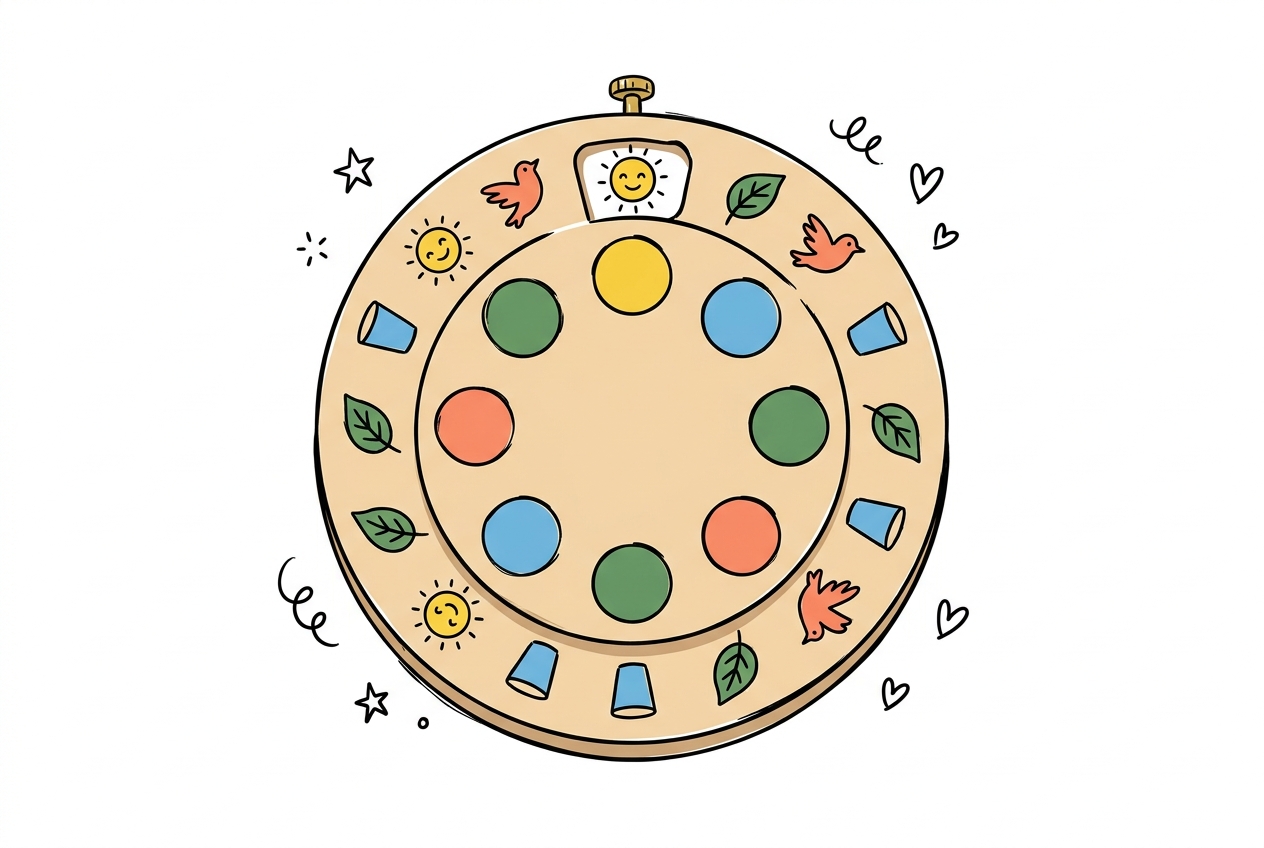
The alphabetic principle is the understanding that letters and letter combinations represent the sounds of spoken language. Once a child grasps this code, phonics has a purpose and words stop being random shapes. Every phonics skill — blending, digraphs, vowel teams — builds on this one foundational insight.
The alphabetic principle is the understanding that letters and letter combinations represent the sounds of spoken language. Once a child grasps this code, phonics has a purpose and words stop being random shapes. Every phonics skill — blending, digraphs, vowel teams — builds on this one foundational insight.
What exactly is the alphabetic principle?
The alphabetic principle is the idea that there is a systematic, predictable code linking the letters on a page to the sounds in spoken words.
It has two layers. The first is alphabetic understanding: the basic realisation that print represents speech, that those squiggles on the page stand in for sounds your mouth makes. The second is phoneme-grapheme correspondence: knowing which letters, or letter combinations, map to which sounds. The letter m says /m/. The letters sh together say /sh/. The letters ai in rain say the long-A sound.
The National Reading Panel (2000) identified the alphabetic principle as one of the five pillars of effective early reading instruction, alongside phonemic awareness, fluency, vocabulary, and comprehension. It is not a teaching method. It is a concept — the “aha” that makes a child understand why phonics lessons matter.
How is the alphabetic principle different from knowing the ABCs?
This is where many parents hit a snag.
Knowing the alphabet means knowing the names of letters: A says “ay,” B says “bee,” C says “see.” It is an impressive trick for a 3-year-old, and learning letter names before letter sounds is the typical first step.
But the alphabetic principle is about sounds, not names. The letter C has a name (“see”) and a job: it says /k/ in cat and /s/ in city. A child who sings the alphabet song perfectly might still believe that cat starts with “see,” because that is the name they know for that symbol.
The shift from letter names to letter sounds is the move from labelling the code to operating it. Once that shift happens, phonics clicks into place.
When do children typically grasp the alphabetic principle?
Most children begin developing alphabetic understanding between ages 4 and 6, roughly the window spanning preschool through the start of formal schooling. Research is clear: it rarely develops on its own.
A 2026 study published in Cognition (Gioia, Ziegler & Deauvieau) tracked over 800,000 first graders in a nationwide longitudinal investigation and found that knowledge of the alphabetic principle was the strongest predictor of reading fluency one year later. Among children with modest phonemic awareness but solid letter-sound knowledge at the start of the year, 83% became good readers. Among children with high phonemic awareness but weak letter-sound knowledge, only 43% did. The research makes the point plainly: sound awareness and letter-sound mapping are distinct skills, and both matter.
The National Center on Improving Literacy notes that mastery requires explicit, systematic instruction and extensive practice. It is not a skill children reliably absorb by simply being around books.
Why does the alphabetic principle matter so much?
Because every phonics skill a child will ever learn is a piece of the same code.
When a child blends /b/ /i/ /g/ into big, they are applying the alphabetic principle. When they learn that sh is one sound rather than two, they are refining it. When they meet vowel teams like ai or oa, they are extending it. The alphabetic principle is not a box you tick at age 5 and move on from. It is the framework every later phonics lesson hangs on.
This is also why picture-guessing is a signal that the code has not fully landed. A child who scans context clues instead of decoding has found a workaround that functions for early, heavily illustrated books — but breaks down as text gets harder. For more on that pattern, see Why Does My Child Guess Words From the Pictures?
Research published in Frontiers in Psychology in 2024 (Lyytinen, Grigorenko & Sigmundsson) described the acquisition of letter-sound knowledge as the first of three crucial steps toward full literacy, noting that comprehension development cannot accelerate until the decoding foundation is secure.
The stages of alphabetic development
Researcher Linnea Ehri’s well-known phases of word reading show that the alphabetic principle builds in layers:
| Stage | What the child can do | Typical age |
|---|---|---|
| Pre-alphabetic | Recognises logos and shapes, not letter-sound links | 2–4 years |
| Partial alphabetic | Uses a first or last sound as a clue (“b” for ball) | 4–5 years |
| Full alphabetic | Maps every phoneme to a letter or letter combination | 5–7 years |
| Consolidated alphabetic | Reads familiar chunks (morphemes, rimes) in one glance | 6–8 years |
Progress through these stages is not fixed to a calendar. A child who has had lots of playful phonics exposure may reach the full-alphabetic stage before their sixth birthday; another child encountering systematic instruction for the first time in kindergarten may arrive there a year later. Both timelines are within the normal range.
As of 2024, research findings in 40 US states had resulted in laws requiring evidence-based reading instruction aligned with the science of reading — a policy shift that puts the alphabetic principle at the centre of early literacy teaching nationwide.
How can you support the alphabetic principle at home?
You do not need specialist materials. Three kitchen-table moves that research supports:
1. Say the sound, not just the name. When pointing to letters during shared reading, say /m/ (the sound, like a hum) rather than “em.” If you catch yourself using letter names, just add the sound: “That’s M, and it says /m/.”
2. The two-minute sound-mapping game. Pick three small objects from around the house: a cup, a spoon, a pen. Say each word slowly, stretching the first sound: “c-c-cup.” Ask your child what sound that starts with. Then find the letter that makes that sound together. You are building the bridge from sounds they already know to the symbols that represent them — the core of the alphabetic principle.
3. Pair decodable books with story books. Decodable books are written so that every word follows the letter-sound patterns a child has already been taught. They give children a place to practise the code with minimal guessing, which is how the principle becomes automatic. Story books build vocabulary and a love of reading. Both serve a purpose; neither replaces the other.
The What Works Clearinghouse Practice Guide on Foundational Skills (IES, 2016) recommends beginning letter-sound mapping activities in kindergarten at the latest, while noting that structured phonological play can begin meaningfully from age 4.
What if my child knows letters but still cannot connect them to sounds?
This is common, and it is usually not a sign of a deeper problem.
It most often means a child has learned letter names (a label task) but not letter sounds (a mapping task). These are genuinely different skills, stored differently in memory. A few weeks of consistent, explicit sound-mapping practice — always pairing the written letter with its spoken sound, always practising inside real words rather than in isolation — is usually enough to shift the picture.
Structured literacy programmes, which teach phoneme-grapheme correspondences in a clear, cumulative sequence, are designed exactly for this moment. They do not assume the alphabetic principle has landed; they build it deliberately, step by step.
If the difficulty persists after a sustained period of explicit instruction, a conversation with your child’s teacher is a sensible next step. Not because something is wrong, but because the earlier a child’s learning profile is understood, the more precisely support can be tailored.
If you’d like your child to practise letter-sound connections in a structured, playful way — with immediate feedback every time they get a sound right — Snappy Reading is built to make that moment feel like a win, not a drill.
Frequently asked questions
Is the alphabetic principle the same as phonics?
Phonics is the teaching method that builds on the alphabetic principle. The alphabetic principle is the underlying concept: the understanding that letters represent sounds. Phonics lessons are how children learn to apply that understanding systematically to read and spell words.
At what age should my child understand the alphabetic principle?
Most children begin developing it between ages 4 and 6, with a solid grasp expected by the end of first grade (around age 6–7). The key point is that it needs explicit teaching. It does not arrive reliably through exposure to books alone.
Can a child learn phonics without understanding the alphabetic principle?
Not durably. A child can memorise individual letter-sound rules without grasping the bigger concept, but the learning tends to be fragile and slow to generalise. When the insight lands and a child sees that the whole writing system is a code, previously disconnected facts snap into a coherent system.
Does learning the alphabet song first help or hurt?
It helps children learn letter names and their order, which are genuinely useful. The risk is that some children conclude the letter IS its name: that A makes the sound 'ay.' The fix is simple: always pair the name with the sound. 'A, and it says /a/ in ant.' Both pieces of knowledge matter.
Why do some children pick up the alphabetic principle faster than others?
Prior experience with letter play, phonological awareness skills, and the quality of instruction are the main factors. Some children arrive already aware that print maps to speech; others are encountering the idea for the first time. Neither group is behind — they are just at different starting points for the same journey.
How does the alphabetic principle connect to spelling?
Spelling is the alphabetic principle run in reverse: instead of looking at a letter and retrieving the sound, a child hears a sound and retrieves the letter. Strong spelling and strong reading reinforce each other, which is why good phonics programmes teach both together.
Reviewed against: National Reading Panel (2000); National Center on Improving Literacy (2018); IES What Works Clearinghouse Foundational Skills Practice Guide (2016); Gioia, Ziegler & Deauvieau, Cognition (2026); Lyytinen, Grigorenko & Sigmundsson, Frontiers in Psychology (2024).