What Are R-Controlled Vowels? (The Bossy R, Explained)
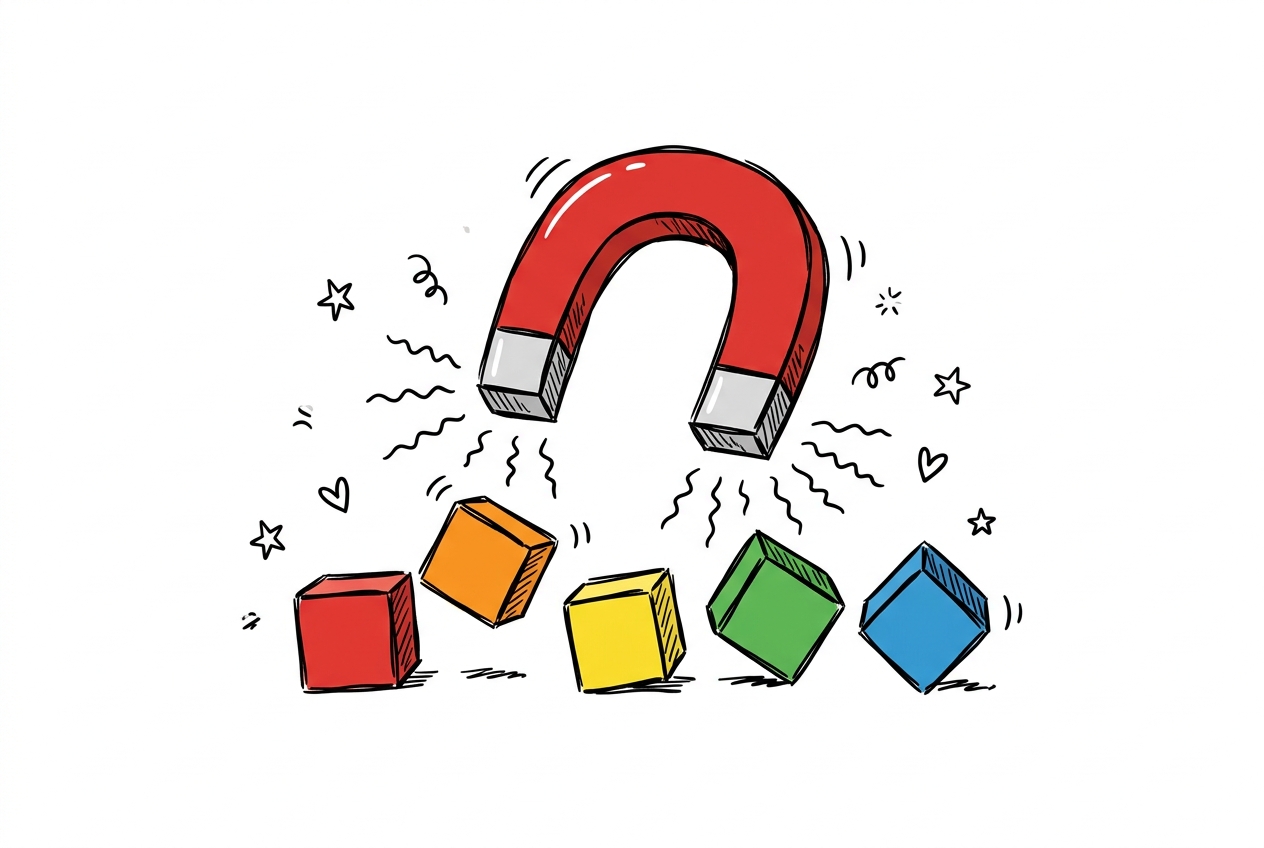
R-controlled vowels are vowel sounds changed by the letter R — the /ar/ in 'star', the /or/ in 'fork', and the /er/ sound shared by 'fern', 'bird', and 'surf'. R overrides normal short and long vowel rules, which is why children taught by sound rules alone often stumble on these words. Teaching them as their own syllable type — after short vowels are secure — clears the confusion fast.
Your child has been reading short-vowel words with growing confidence: cat, pet, sit, hot, bug. Then they hit the word bird and stare. It looks like it should say /bɪd/ — but it doesn’t. The vowel has changed, and no one warned them.
R-controlled vowels are one of the most reliably confusing steps in early phonics, precisely because they break a rule children have only just learned. Once you explain the mechanism, though, most children move through the pattern quickly — and that moment when “first” and “third” and “bird” all suddenly click into place is one of the more satisfying things to watch.
What is an r-controlled vowel?
An r-controlled vowel is any vowel immediately followed by the letter R in the same syllable. The R “controls” — changes — how the vowel sounds, pulling it away from its usual short or long sound into something different. Teachers sometimes call R the bossy letter because it simply overrides the vowel next to it.
English has five r-controlled vowel patterns:
| Pattern | Sound | Example words |
|---|---|---|
| ar | /ar/ | star, farm, card, bark, arm |
| or | /or/ | fork, corn, sort, born, port |
| er | /er/ | fern, verb, herd, term, stern |
| ir | /er/ | bird, shirt, firm, first, stir |
| ur | /er/ | surf, burn, curl, hurt, turn |
Notice that er, ir, and ur all make the same /er/ sound. This surprises parents and trips up children who have been told that letters always carry consistent, unique sounds. We will come back to this.
Why does R change the vowel sound?
It is essentially physics. When you say a short /a/ your tongue sits low and flat in your mouth. When R immediately follows it, your tongue pulls back and curves upward to form the R sound — and it drags the vowel along with it, creating the blended /ar/ you hear in “star.” Linguists call this coarticulation: neighbouring sounds in a word physically influence each other as the mouth transitions between them. The R’s pull is strong enough that the vowel loses its identity entirely.
This is why the normal short-vowel rule — one vowel between consonants equals a short sound — fails to predict “car.” The word looks as though it should rhyme with “cap.” It does not, because R has overridden the rule before the vowel even finishes sounding.
The National Reading Panel (2000) identified this kind of pattern-breaking as precisely why phonics instruction must be systematic and cumulative: children need explicit teaching of each pattern in sequence, not an invitation to guess or overgeneralise rules they have already been taught.
When do children typically learn r-controlled vowels?
R-controlled vowels sit in the middle of a structured phonics sequence. The IES/WWC Practice Guide Foundational Skills to Support Reading for Understanding in Kindergarten Through 3rd Grade places them after children have mastered:
- Short-vowel CVC words (cat, pet, sit, hot, bug)
- Common consonant blends (bl, cr, st — see our guide to consonant blends)
- Digraphs and long-vowel patterns, including vowel teams (ai, ea, oa)
In practice, most children are introduced to r-controlled vowels in late first grade or early second grade (ages 6–7). If your child is older and encounters these patterns for the first time now, teach the pattern explicitly — do not assume it will absorb through exposure alone.
A 2023 meta-analysis of 53 reading intervention studies — Hall and colleagues, in Reading Research Quarterly — found significant, positive effects on norm-referenced reading outcomes when instruction was explicit and sequenced, with higher-dosage programmes producing larger gains. The implication for home practice is the same one research keeps landing on: a little focused teaching every day outperforms a single long session once a week.
How to teach r-controlled vowels at home
You do not need worksheets or specialist resources. This three-step routine takes about five minutes per session.
Step 1 — Introduce the pattern with a contrast pair
Start with /ar/ (the easiest to hear and the most distinct). Say two words aloud — “cap” and “car” — and ask your child what changed. Guide them to notice the vowel shifted when R appeared. Repeat with “pet” and “her,” then “pot” and “port.” The contrast makes the R’s influence concrete rather than abstract.
Step 2 — Word-sort game
Write six to ten words on small cards — three with the target pattern (star, farm, bark), three with the regular short vowel (hat, lamp, sand), and two clear distractors. Ask your child to sort them: “bossy R words” in one pile, “ordinary vowel words” in another. Sorting builds pattern recognition faster than drills because it forces active comparison rather than rote recall.
Step 3 — Five words of dictation
Read five r-controlled words aloud, one at a time, and ask your child to write each one. Do not correct mid-word — let them finish, then review together. Dictation reveals whether the pattern has moved from recognition (reading it) to production (spelling it), which is the sign that it has truly been learned and not merely spotted.
Repeat these three steps over several sessions with /ar/, then introduce /or/ the same way. The Education Endowment Foundation’s 2024 Teaching and Learning Toolkit rates phonics as among the highest-evidence approaches in early literacy, with an average +5 to +6 months of additional progress compared to less-structured alternatives — even short daily practice sessions accumulate.
What about er, ir, and ur — the look-alike triplets?
These three patterns all make the same /er/ sound, which can feel like a particularly unfair feature of English. It is not a modern inconsistency; it is a historical one. English inherited words from Old English, Latin, Old French, and Old Norse, each bringing its own spelling conventions, and all three spellings ended up representing the same sound.
The practical advice for early readers: teach all three patterns for reading first. When a child sees “bird,” they decode /b/ + /er/ + /d/ = “bird.” They do not need to decide at that moment whether the vowel should be spelled ir, er, or ur. That is a spelling question, and it can come later. Research on orthographic mapping shows that repeated reading of correctly spelled words is what locks the right spelling into long-term memory — so the reading practice itself is also doing the spelling work, just more slowly.
A 2024 study by Anku, published in the International Journal of Research and Scientific Innovation, found that explicit phonics instruction produced a moderate-to-large effect on reading skills for learners with reading difficulties (partial η² = 0.399, p < 0.001). Teaching a pattern directly, clearly, and repeatedly is more effective than waiting for a child to notice it independently.
Quick guide to teaching order
| Teach first | Teach second | Practise together |
|---|---|---|
| ar (star, farm) | or (fork, corn) | er, ir, ur (fern, bird, surf) |
Once your child reads all five patterns with confidence, decodable books at the r-controlled level give them the sustained reading practice that moves a pattern from effortful decoding to automatic recognition. That automaticity — not drilling — is what eventually frees up mental space for comprehension.
Written by the Snappy Reading Team. Reviewed against the National Reading Panel (2000), IES/WWC Practice Guide (2016), Hall et al. (2023, Reading Research Quarterly), Anku (2024, IJRSI), and the EEF Teaching and Learning Toolkit (2024).
Frequently asked questions
What are the five r-controlled vowels?
They are ar (as in 'star'), or (as in 'fork'), er (as in 'fern'), ir (as in 'bird'), and ur (as in 'surf'). The last three — er, ir, and ur — all make the same /er/ sound, which is why they are taught together after ar and or are secure.
When do children learn r-controlled vowels?
Most children are ready in late Year 1 or early Year 2 (ages 6–7 / first to second grade), after they can reliably read short-vowel CVC words, simple blends, and common digraphs. The IES practice guide recommends teaching phonics patterns in a cumulative, building-block sequence.
Why does R change the vowel sound?
In English phonology, R sits so close in the mouth to vowel sounds that it physically pulls the vowel into a new position — linguists call it coarticulation. The result is a blended vowel-R sound that follows neither normal short nor long vowel rules.
Are er, ir, and ur all the same sound?
Yes — all three make the /er/ sound you hear in 'fern', 'bird', and 'surf'. English inherited words from several languages, each bringing its own spelling convention. Teach children to read all three patterns confidently first; which spelling to choose when writing can come later.
Do I need special materials to practise bossy R at home?
No. Index cards, sticky notes, or a whiteboard are all you need. The three-step routine in this article — introduce, sort, dictate — takes about five minutes per session and uses no printed worksheets.
Reviewed against: National Reading Panel (2000); IES/WWC Practice Guide: Foundational Skills to Support Reading for Understanding in K–3 (2016); Hall, C. et al. (2023). Reading Research Quarterly, 58, 285–312; Anku, F. K. (2024). International Journal of Research and Scientific Innovation; EEF Teaching and Learning Toolkit: Phonics (2024 update).