How to Teach the /sh/ Sound at Home (Without the Stress)
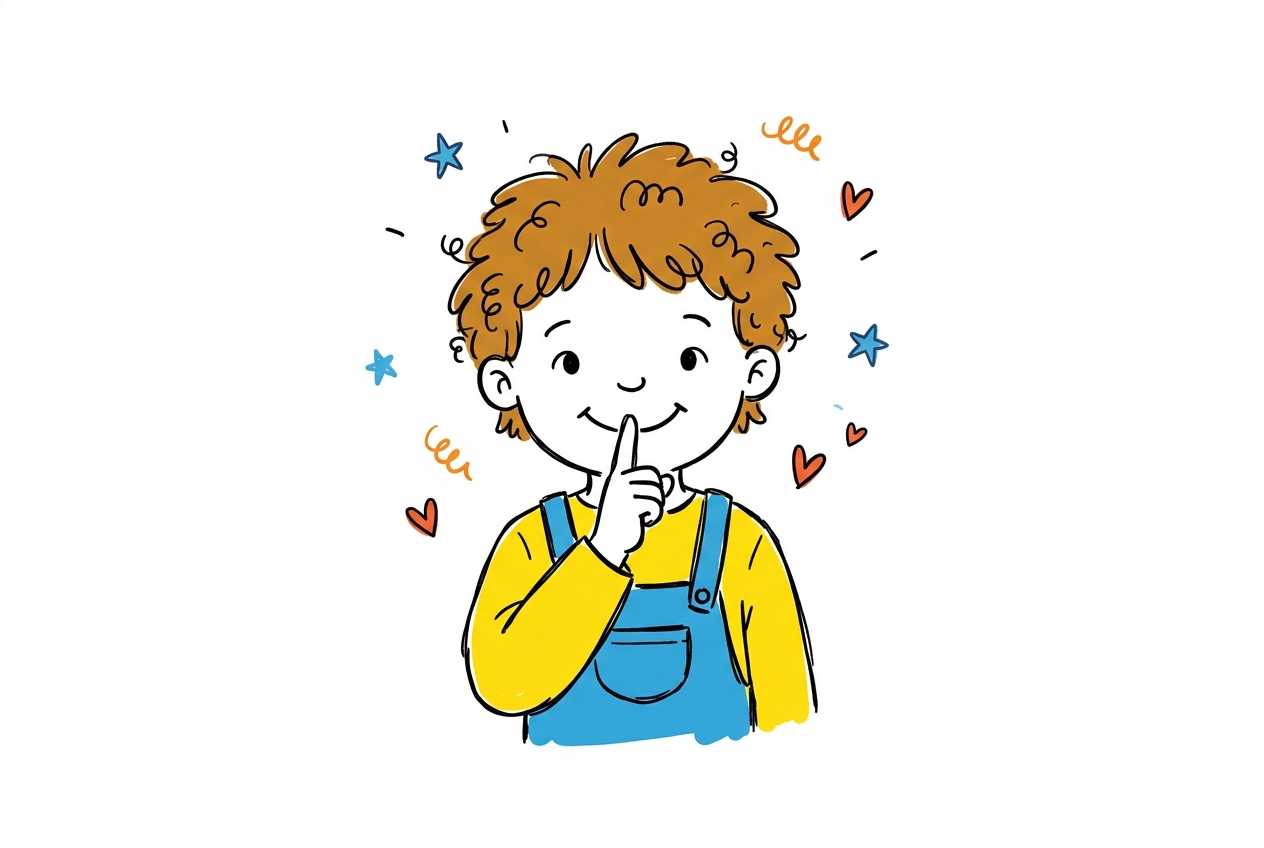
Teach /sh/ as one sound made by two letters working together (a digraph), not as 's' plus 'h'. Model it with a finger to your lips — the same 'be quiet' shhh — then have your child spot it at the start of words like ship and the end of words like fish. Keep sessions to five playful minutes.
If your child has been happily reading cat, pin, and mud and then hits the word ship, something surprising can happen: they sound out s… h… i… p and end up with a word that doesn’t exist. That’s not a mistake to worry about — it’s the exact moment to introduce digraphs, and /sh/ is the friendliest one to start with.
Here’s the good news: you don’t need flashcards, an app subscription, or a teaching degree. You need about five minutes and the same shhh you already use at bedtime.
What is the /sh/ sound, really?
The /sh/ sound is a digraph — two letters (s and h) that join forces to make one brand-new sound. The trap is that both letters already have their own sounds, so a child who’s been taught to sound everything out letter by letter will reasonably try “s-h.” Our job is to gently overwrite that instinct: when s and h stand next to each other like this, they stop being themselves and become one smooth shhh.
Want to hear it exactly the way we teach it? — that’s the sound, smooth and unbroken, no “s” and no “h” in earshot.
This “two letters, one sound” idea is a cornerstone of systematic phonics, and it’s worth naming out loud for your child. Kids love a good secret rule.
A 5-minute routine to teach /sh/ at home
- Make the sound, not the letters. Finger to your lips, shhhh — the universal “quiet” sound. Tell your child this is the sound s and h make together. Let them try it. Stretch it out; /sh/ is a sound you can hold.
- Hunt for it at the start. Say a few /sh/ words slowly — ship, shop, shell, shoe — and have your child raise a hand the instant they hear the shhh at the front.
- Hunt for it at the end. This is the step many parents skip. Digraphs love the ends of words too: fish, wish, dish, brush. Hearing /sh/ in both spots is real phonemic awareness at work, and it tells you it’s really clicking.
- Read it in a real word. Now go back to ship. Cover the sh, reveal it as one chunk, and blend the sounds: sh – i – p. Watch the lightbulb.
Keep it short and a little silly. Five good minutes beats twenty tense ones.
/sh/ words to practise, by position
| /sh/ at the start | /sh/ at the end | /sh/ in the middle |
|---|---|---|
| ship, shop, shell | fish, wish, dish | washing, wishing |
| shoe, shark, sheep | brush, crash, fresh | bishop, cushion |
Which mix-ups should I expect?
Three are completely normal — and each one tells you something useful:
- “s-h” (two sounds). The child is still applying the single-letter rule. Just re-model: “When they’re together, they make one sound — shhh.”
- /sh/ vs /ch/. These live right next to each other in a child’s mouth. /sh/ is long and airy (shhh); /ch/ is short and punchy (ch-ch, like a little train). Saying them back to back makes the difference physical, not abstract.
- /sh/ vs plain /s/. Ship becoming sip. Have them watch your lips — /sh/ rounds them forward; /s/ keeps them in a flat smile.
None of these mean anything is wrong. They’re the ordinary detours every reader takes.
How do I know they’ve actually got it?
This is the part that’s genuinely hard at home: a child can point to the right answer or guess from the picture and look like they’ve mastered a sound they can’t yet produce. Reading is ultimately about the mouth, not the finger — and it’s tough to judge your own child’s shhh while you’re also the one modelling it.
That’s exactly the gap Snappy was built for. It listens as your child says each sound and lights up the letters the moment the /sh/ is genuinely correct — so “got it” is something your child hears themselves, not something you have to referee. It’s the same five-minute routine above, just with an ear that never gets tired.
Whatever you use, the principle is the same: one sound, two letters, five playful minutes. Start with /sh/, and the rest of the digraphs (ch, th, wh) will feel a whole lot less scary.
Frequently asked questions
Is /sh/ one sound or two?
One sound. The letters s and h form a digraph — two letters that team up to make a single new sound (/sh/), not 's' followed by 'h'. Teaching it as one sound from the start prevents the common 's-h' blending mistake.
What age should a child learn the /sh/ sound?
Most children meet digraphs like /sh/ after they're confident with single letter sounds and simple CVC words (cat, pin), often around ages 5–6. There's no hard cutoff — readiness matters more than age.
What's the difference between /sh/ and /ch/?
/sh/ is a long, smooth, airy sound (shhh). /ch/ is a short, punchy sound that starts with a tiny stop (ch-ch, like a train). Saying them back to back — shhh vs ch-ch — helps a child feel the difference.
Reviewed against: National Reading Panel (systematic phonics); the science-of-reading evidence base on digraph instruction.